Today we’re introducing ClearDraft for Books, a new feature designed to help publishers and in-house legal teams review lengthy manuscripts for potential legal risk more efficiently, while keeping expert legal judgment at the centre of the clearance process.
At ClearDraft, we believe important stories shouldn’t be stalled by clearance processes that are often costly, time-intensive, and difficult to scale. Nowhere is that challenge more pronounced than in long-form publishing, where reviewing a single manuscript can take days and require lawyers to work through hundreds of pages to identify potential legal issues.
ClearDraft for Books reduces that burden. Using bespoke media law AI, ClearDraft scans the full manuscript for potential legal risks and, in as little as 10 minutes, can generate a detailed report for lawyer review, highlighting flagged passages and outlining potential issues, relevant defences, possible harm, and suggested revisions.
Put simply, ClearDraft for Books allows legal teams to focus on resolving risk — rather than finding it.
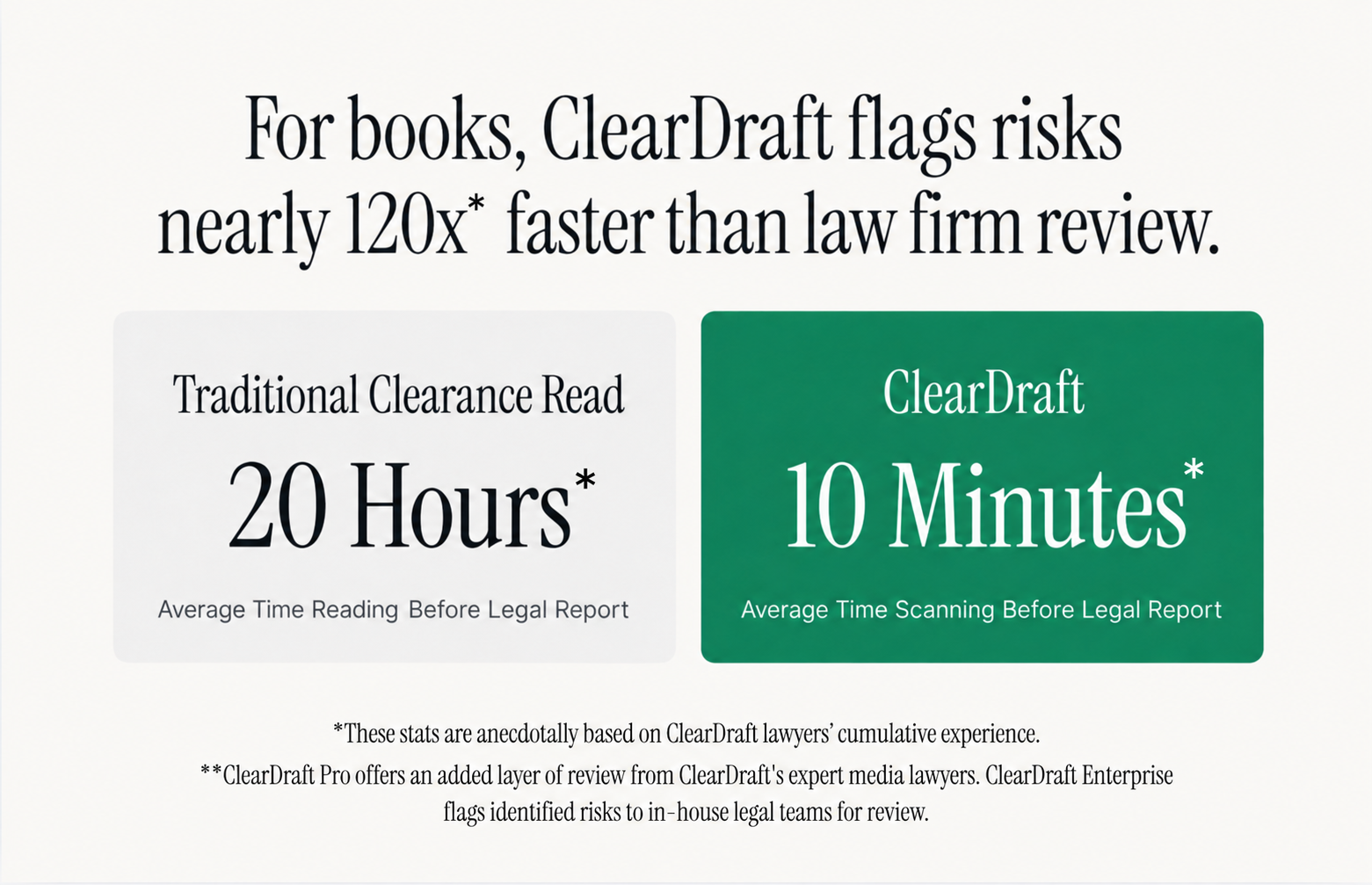
In our experience, a lawyer’s manual read of a typical manuscript takes at least 20 hours - and that's before substantive legal analysis begins.
ClearDraft reduces the initial review time from hours to minutes, giving lawyers a much faster route to the issues that require their attention.
By taking on the time-consuming work of identifying and organising potential legal issues, ClearDraft allows legal teams to focus their expertise where it matters most: assessing risk, considering relevant defences, and advising editorial teams on how to address potential concerns.
But the benefits extend beyond saving time on individual reviews.
With faster, more affordable risk analysis, publishers can involve legal teams earlier and revisit manuscripts as they evolve. This gives authors and editors the opportunity to identify and address potential concerns while revisions are still practical, rather than discovering significant issues late in the publishing process.
For publishers managing multiple titles across imprints, this creates a more efficient and scalable approach to manuscript clearance, reducing the burden on legal teams while keeping expert judgment at the centre of the process.
How ClearDraft for Books Works
ClearDraft is designed to fit into existing publishing and legal workflows rather than replace them. It handles the initial work of identifying and organising potential risk, while leaving substantive analysis and final clearance firmly in the hands of qualified counsel.
1. Upload the Manuscript and Add Relevant Context
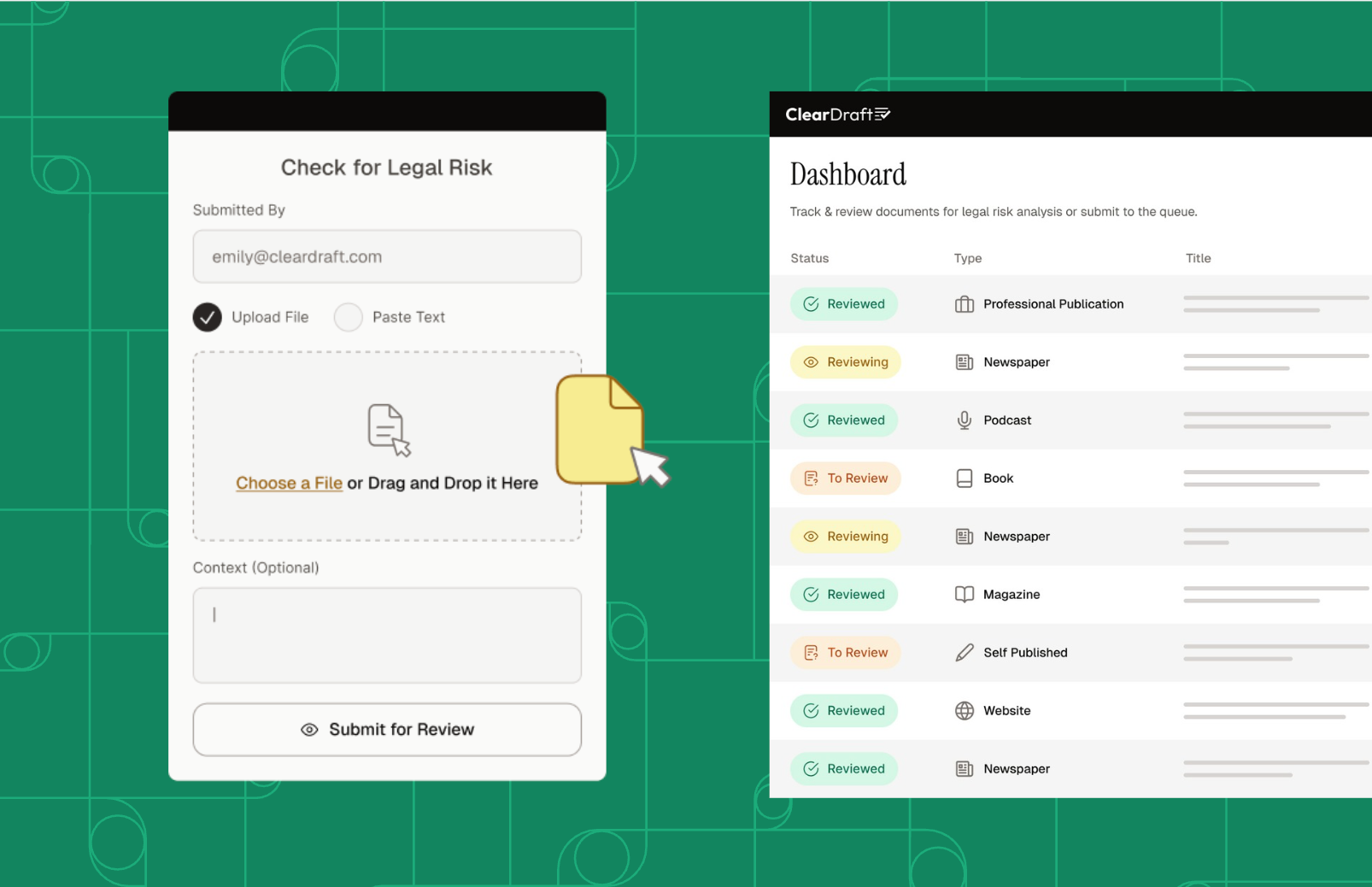
The process begins by uploading the manuscript to ClearDraft.
Before analysis starts, the reviewer answers a short series of questions about the work and the circumstances surrounding it, including whether the manuscript is fiction or non-fiction, whether it depicts real people, and if those people are living or deceased, whether there is active or anticipated litigation etc.
Providing this information upfront gives the reviewing lawyer useful context, helping them make more informed assessments and recommendations based on the circumstances surrounding the manuscript.
2. ClearDraft Scans the Full Manuscript
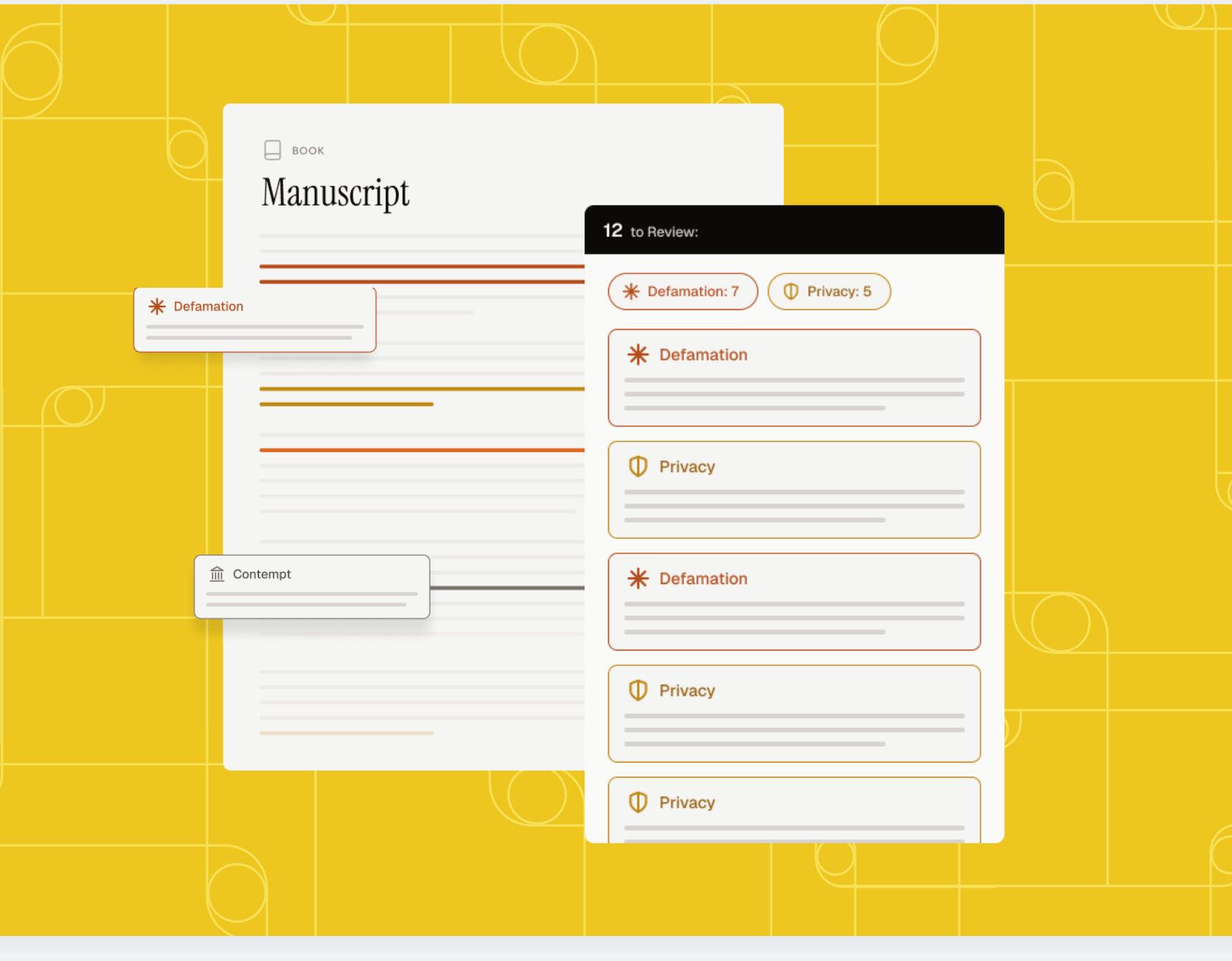
ClearDraft’s bespoke media law AI analyses the manuscript for potential legal risks, including defamation, privacy, and contempt of court.
For each flagged passage, the platform provides structured analysis covering the potential concern, possible harm and relevant defences, giving lawyers the information they need to consider and suggest appropriate revisions.
Because long-form content often requires lawyers to connect information across hundreds of pages, ClearDraft for Books also includes new tools designed specifically for manuscript review: Broader context analysis and the people view summary. These surface relevant context from elsewhere in the text and bring related issues and references to individuals together, giving lawyers a clearer view of how potential risks fit within the work as a whole.
3. The Legal Team Reviews ClearDraft's Findings and Applies Their Judgment
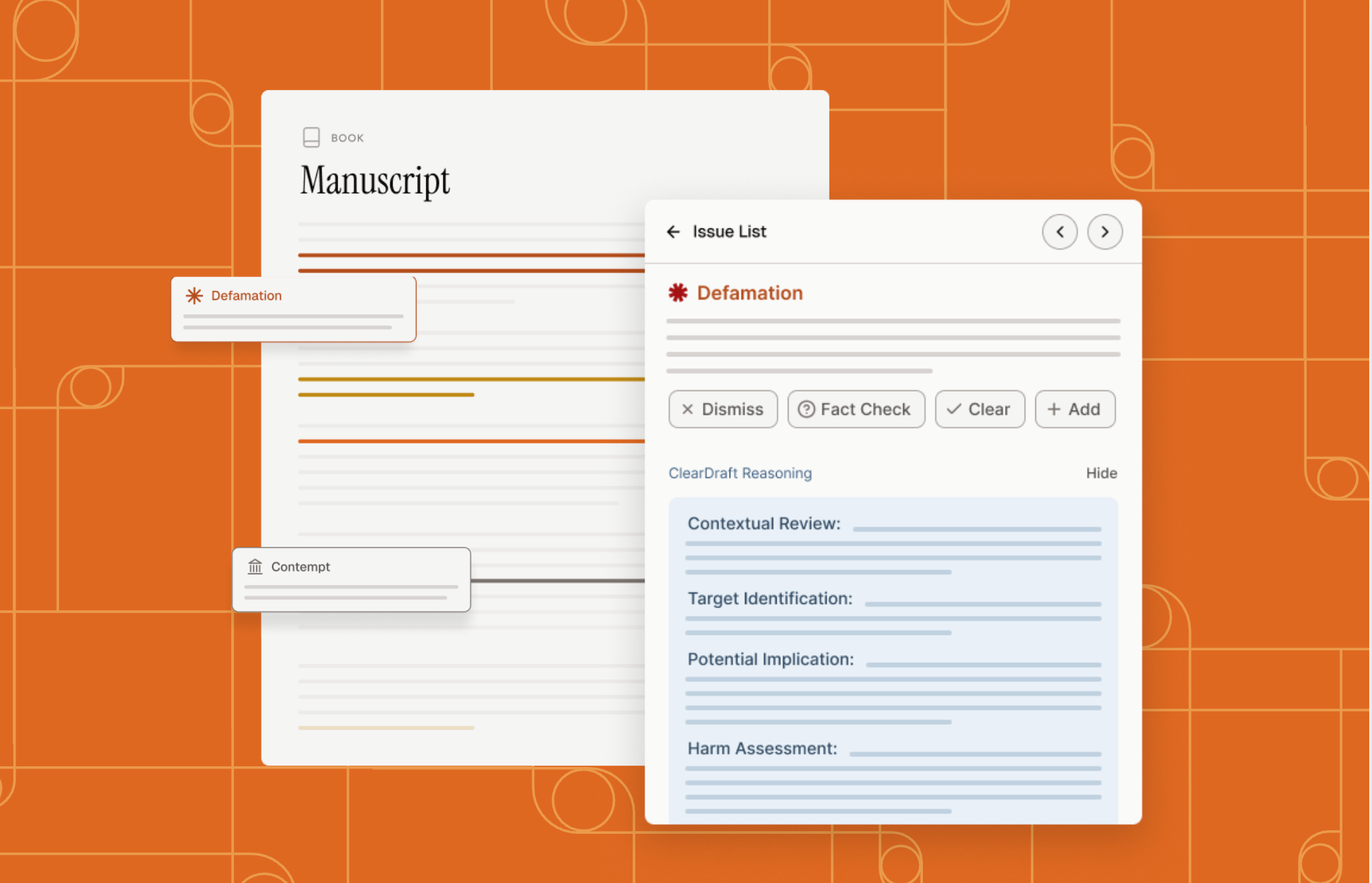
The findings then move to qualified counsel.
Rather than starting with hundreds of unreviewed pages, lawyers can focus on the passages that may require attention, consider the relevant context, prioritise significant concerns, and provide comments or recommendations.
Where appropriate, related issues can be assessed together and multiple flags resolved in the same review.
The platform supports the review. The lawyer makes the decision.
4. Editorial Teams Revise Based on the Legal Judgment Provided
Once the legal team has completed its review, authors and editors can use that guidance to make targeted revisions to the manuscript, addressing the issues identified while preserving the integrity of the work.
If the manuscript changes substantially, it can be run through ClearDraft again, allowing new or amended material to be reviewed as the work develops. This is particularly valuable in long-form publishing, where substantial revisions can introduce new context or alter existing risk.
Want a closer look at how ClearDraft can streamline your manuscript review process? Request a demo.
New Capabilities Built for Long-Form Content
Long-form content requires a different approach to clearance. ClearDraft for Books introduces new capabilities designed specifically for the way legal issues develop and connect across hundreds of pages.
Expanded Contextual Analysis
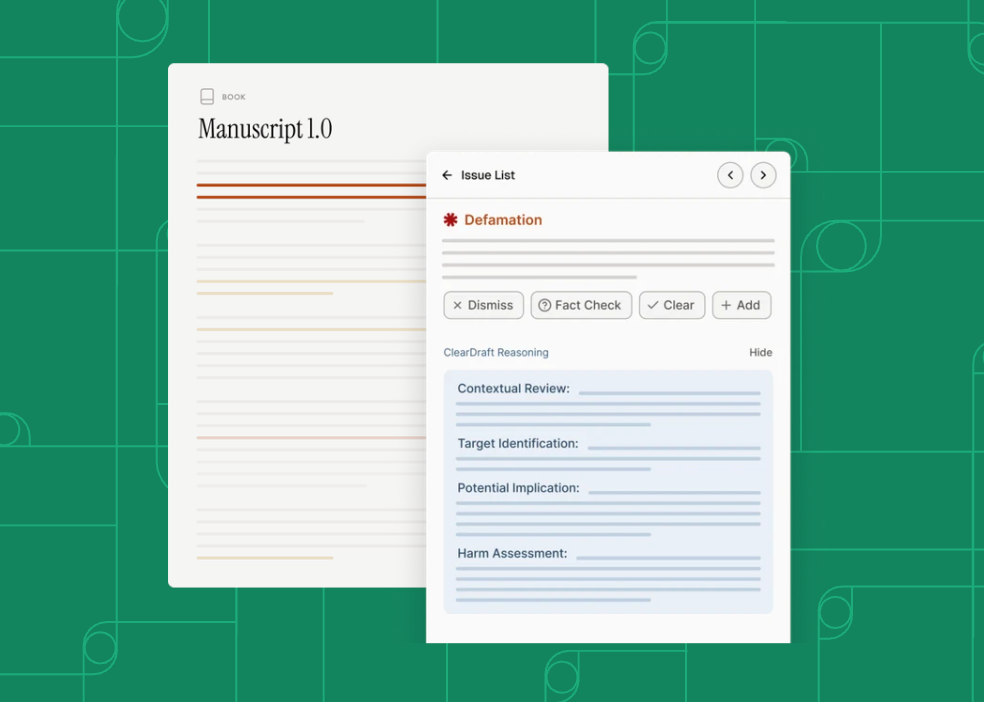
ClearDraft does more than flag individual passages. It examines the wider manuscript for context that may affect how each potential issue should be understood.
ClearDraft searches for related passages that may change the assessment. A statement that appears concerning on its own may be qualified elsewhere in the book, while separate claims can become more significant when considered together.
ClearDraft can also check whether potentially defamatory or privacy-related claims about named individuals are already part of the public record. Where relevant, those findings and their sources are included in the report, giving lawyers additional external context to consider alongside the manuscript.
By bringing those connections together, ClearDraft gives reviewers a stronger starting point without requiring them to search hundreds of pages or repeat contextual research from scratch.
People View
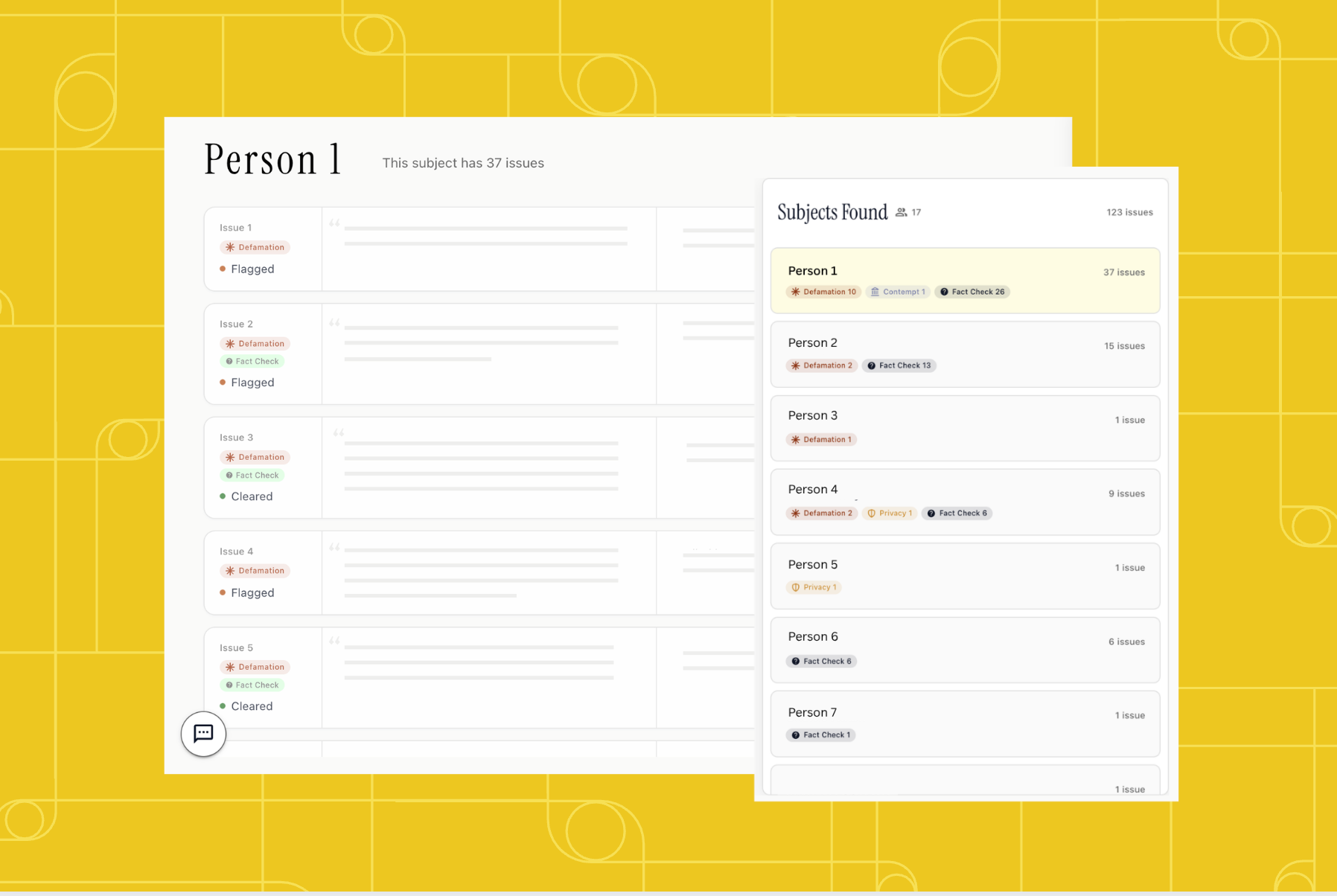
In a lengthy manuscript, references to the same person can be scattered across dozens of pages and multiple chapters, making it difficult to understand the full legal picture without repeatedly searching the text.
People View brings every flagged issue connected to a person into a single location, allowing legal teams to see how that individual is represented across the manuscript, move quickly between relevant passages, and examine each issue in detail.
Related concerns can be assessed together, making patterns easier to identify and multiple issues easier to resolve where appropriate.
What This Means for Publishers and Their In-House Legal Teams
The impact of ClearDraft for Books extends beyond the speed of a single review. By reducing the time and manual work required to identify potential risk, publishers can make better use of legal capacity, reduce clearance costs, and bring legal review into more stages of the writing and publishing process.
Spend Less Time Finding Risk, More Time Assessing It
A traditional legal read of a manuscript can be a significant undertaking. Based on the experience of ClearDraft’s lawyers, simply reading a book closely enough to identify potential legal issues can take around 20 hours — before substantive legal analysis, judgment, and preparation of the final report even begin.
ClearDraft can scan the same manuscript for potential clearance issues in approximately ten minutes, dramatically reducing the time required for initial risk identification.
With potential issues already surfaced and organised, legal teams can devote more time to substantive analysis, advice, and the titles that require the closest scrutiny.
For in-house teams managing clearance across an entire publishing programme, that can create valuable additional capacity while lowering the overall cost of manuscript clearance, making it more practical for publishers to review more titles without placing the same strain on legal resources.
Review Manuscripts Earlier and More Often
The time and cost of traditional manuscript clearance can limit how often legal review happens during the writing process.
When each review requires a lawyer to work through the manuscript from beginning to end, sending successive drafts through clearance can be difficult to justify. As a result, detailed legal review may be concentrated around a manuscript that is already close to final.
ClearDraft changes that equation. Because the initial scan can be completed in minutes, writers and publishers can review manuscripts continuously as the work evolves.
That gives authors and editors more opportunity to investigate concerns, add context, reconsider passages, or make substantial changes while there is still time to do so. If the manuscript is revised significantly, it can be scanned again without repeating the same manual discovery process.
The result is a more flexible approach to clearance, allowing legal insight to be brought into the publishing process at more useful points without adding the same burden to in-house legal teams.
Rather than functioning primarily as a final hurdle before publication, clearance can become a more practical and iterative part of manuscript development.
A Faster, More Cost-Efficient Approach to Manuscript Clearance
ClearDraft for Books helps publishing companies and their in-house legal teams reduce the time, cost, and manual effort involved in manuscript clearance, while keeping expert legal judgment at the centre of the process.
By giving in-house legal teams a faster way to identify potential issues, understand them in context, and return to manuscripts as they evolve, ClearDraft helps them focus their expertise where it matters most — while giving publishing teams greater flexibility throughout the publishing process.